2026-09-05 · Carlos Rivera
Signs a Tree May Be Dangerous Near Your Home
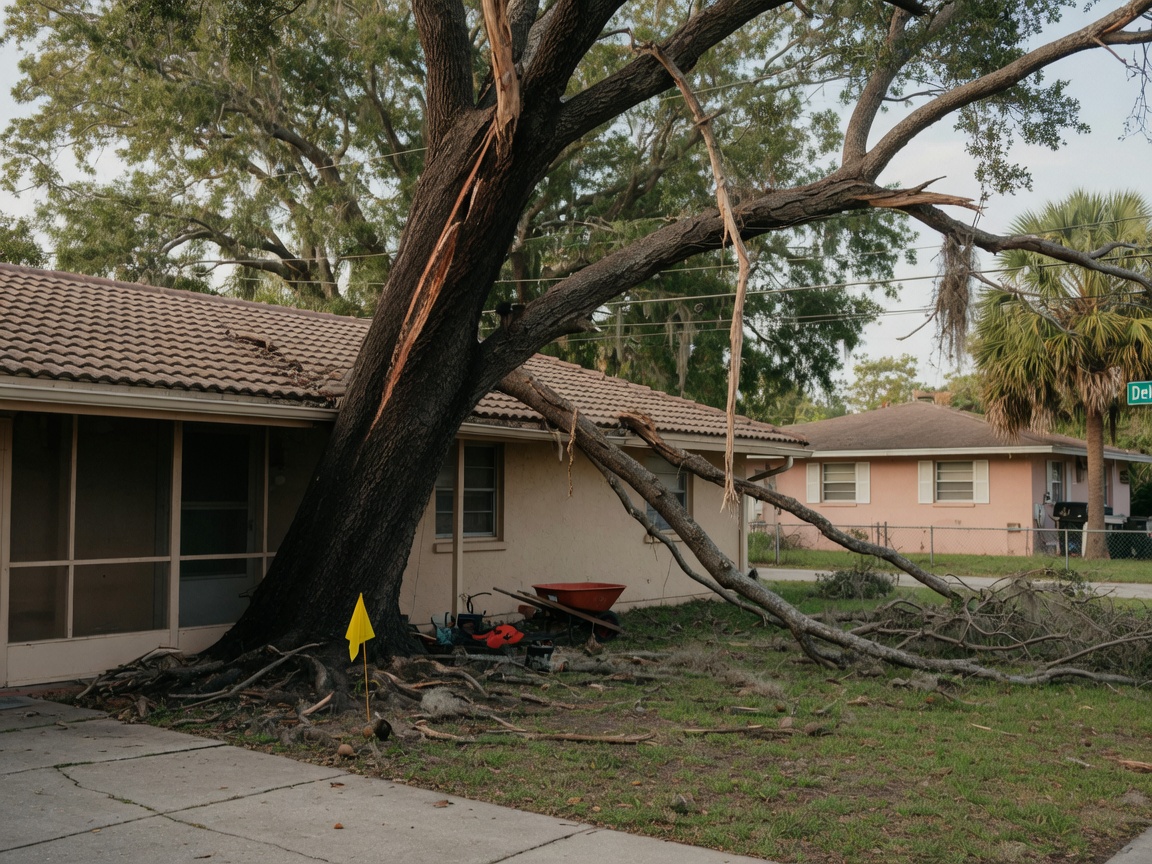
In Deltona, a tree near your home turns dangerous once it develops a pronounced lean, large dead sections, or visible trunk cracks that could lead to failure during summer storms or high winds common in Volusia County.
Leaning Trees and Structural Instability
Trees in Deltona Lakes and Enterprise often lean after years of exposure to prevailing winds off Lake Monroe. A lean exceeding 15 degrees from vertical usually signals root plate movement, especially on the sandy soils typical around these neighborhoods. Homeowners should check the base for soil mounding on the opposite side of the lean, which indicates the roots are pulling up. In mild winters the ground stays softer longer, allowing incremental shifts that become obvious only after repeated hot summer rains. If the lean points toward a roofline or driveway, immediate evaluation prevents sudden drops during afternoon thunderstorms. Emergency Tree Removal addresses these cases when the risk is imminent.
Trunk Cracks, Cavities, and Decay
Vertical cracks running more than 12 inches or cavities larger than a softball often appear in older oaks and pines throughout Deltona. These openings collect moisture in the humid subtropical summers, accelerating internal rot that weakens the tree from the inside. Inspect at eye level and higher using binoculars, noting any fungal growth or oozing sap around the openings. Trees planted near Deltona Community Center decades ago frequently show these issues because original root space was limited by sidewalks and utilities. When cavities exceed one-third of the trunk diameter, the remaining wood shell can no longer support the canopy weight during gusts that reach 40 mph in afternoon storms.
Dead Branches and Canopy Decline
Large dead branches, known as widow-makers, become common after mild winters fail to kill off stressed limbs that then succumb in the first heat wave. Count any dead wood over 3 inches in diameter; three or more such branches signal the tree is declining. In neighborhoods bordering Sanford, salt spray from occasional coastal winds can accelerate dieback on the south side of the canopy. Homeowners should also watch for sparse foliage or early leaf drop in late summer, which points to root problems or vascular disease. Tree Trimming vs. Tree Removal: Which Does Your Tree Need? explains when pruning can still save a tree versus when removal is required.
Root Problems and Post-Storm Assessment
Roots damaged by construction or flooding near Lake Monroe lose their anchoring ability, especially on the shallow water table found in much of Volusia. After storms, check for new cracks in the soil around the base or fungal shelves at ground level. When Does a Tree Need Emergency Removal After a Florida Storm? outlines the inspection steps crews follow in Deltona. Trees showing these combined signs require prompt professional review rather than waiting for the next weather event.