2026-09-05 · Carlos Rivera
Tree Trimming vs. Tree Removal: Which Does Your Tree Need?
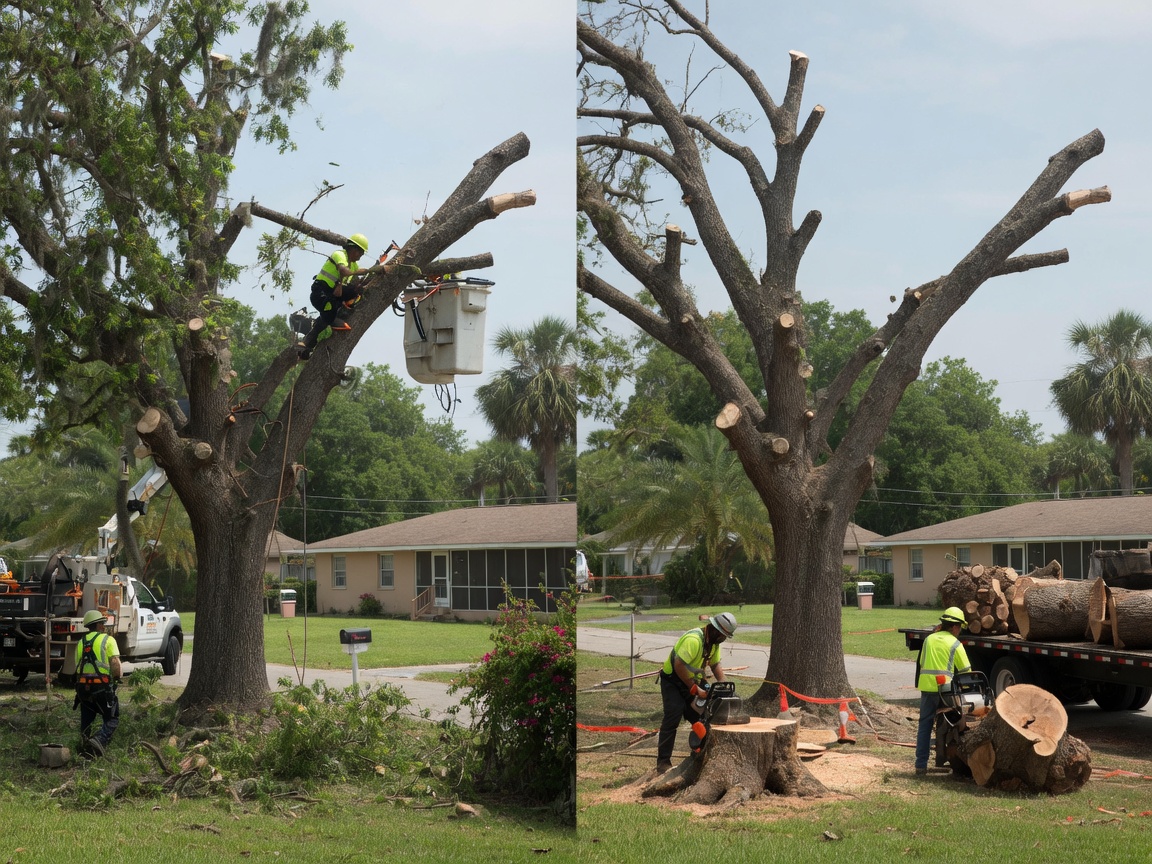
Most trees in Deltona need trimming rather than removal when branches show minor deadwood or overgrowth, but removal becomes necessary once decay reaches the trunk or roots threaten structures. The decision rests on visible signs like cracks, lean, or canopy dieback that appear after summer storms common in the humid subtropical climate.
Assessing Tree Condition in Volusia County
Deltona homes in Deltona Lakes and Enterprise often sit on sandy soils near Lake Monroe that hold moisture unevenly, encouraging shallow root systems in live oaks and pines. These roots can lift sidewalks or press against foundations after heavy rains. A visual check starts at the base for mushrooms or soil heaving, then moves up the trunk for cavities larger than a fist. Branches that cross or rub create entry points for insects that thrive in the area's mild winters. When damage stays limited to outer limbs, trimming restores balance without removing the tree's cooling shade during hot summers.
When Trimming Solves the Problem
Routine trimming removes dead or crossing branches that drop during afternoon thunderstorms rolling in from Daytona Beach. In neighborhoods like Deltona Lakes, this work prevents limbs from striking roofs or power lines while keeping the canopy open enough for air flow that reduces fungal growth. Crews typically cut no more than one-quarter of the live crown at once to avoid stressing trees already coping with summer heat. The process also lifts lower limbs away from sidewalks near the Deltona Community Center, improving clearance for pedestrians and vehicles. Regular trimming every two to three years keeps most mature trees healthy on typical 1960s-1980s lots in the area.
When Removal Becomes the Only Safe Option
Removal is required when more than 50 percent of the canopy shows dieback or the trunk leans more than 15 degrees toward a house. In Enterprise, older slash pines planted too close to homes now lean after decades of wind exposure from the west. Tree removal eliminates the risk of sudden failure during hurricane season. Stumps left behind can later be ground to below grade so new sod or plantings fit the same space. Homeowners near Sanford often choose removal for trees whose roots have already cracked driveways, since continued growth will only worsen the damage.
Local Factors That Influence the Choice
Sandy soils throughout Volusia County drain quickly yet hold enough moisture to support rapid spring growth followed by stress when summer rains taper. This cycle produces heavy limb weight that increases storm breakage near Lake Monroe. Properties in Autumn Woods and Sterling Park sit on smaller lots where a single large tree can shade an entire roof; trimming preserves that benefit while removal opens the yard to full sun. Crews available 24 x 7 respond after evening thunderstorms when residents notice new cracks or hanging branches. Soil compaction from construction in the 1970s and 1980s further limits root space, making early removal preferable for trees showing repeated lean after high winds.
Next Steps for Deltona Homeowners
Walk the yard after the next rain and note any branches that touch the house or lean across fences. Photograph the trunk base and canopy from several angles to track changes over months. When signs point to structural issues, compare the cost of targeted tree trimming and pruning against full removal by reviewing photos with an experienced crew. For trees already showing decay or recent storm damage, the article Signs a Tree May Be Dangerous Near Your Home outlines additional red flags common in this region. The right choice keeps both the tree and the property safe without unnecessary work.